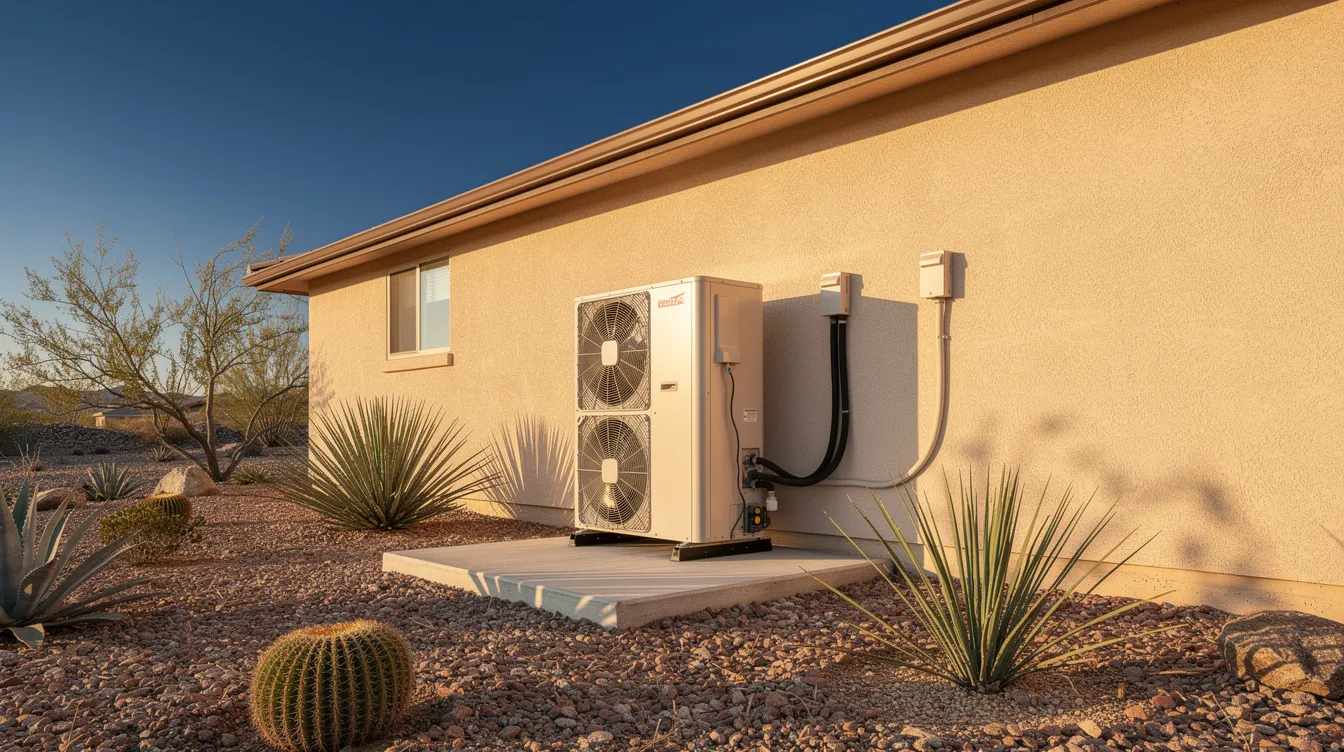
Heat pumps work well in Arizona. They cool your home exactly like a central air conditioner in summer, then reverse to heat it during our short, mild winters, all from one system. Because they transfer heat instead of generating heat, they use less electricity for heating than electric resistance heat strips. For year round comfort, the keys are proper sizing, proper installation and proper maintenance.
Homeowners across Phoenix and the West Valley, from Peoria and Glendale to Surprise and Sun City, often face the same decision when an older air conditioner fails: replace it with another AC, or switch to a heat pump that handles both heating and cooling. Wahl Air Conditioning has served the West Valley since 1957, and our heat pump installation, repair and maintenance services cover every stage of that decision. This guide explains how heat pumps perform in Phoenix, AZ and the surrounding West Valley, how they compare with traditional HVAC systems, the pros and cons, and the problems we see most often.
Understanding Heat Pumps: How They Work in Arizona’s Climate
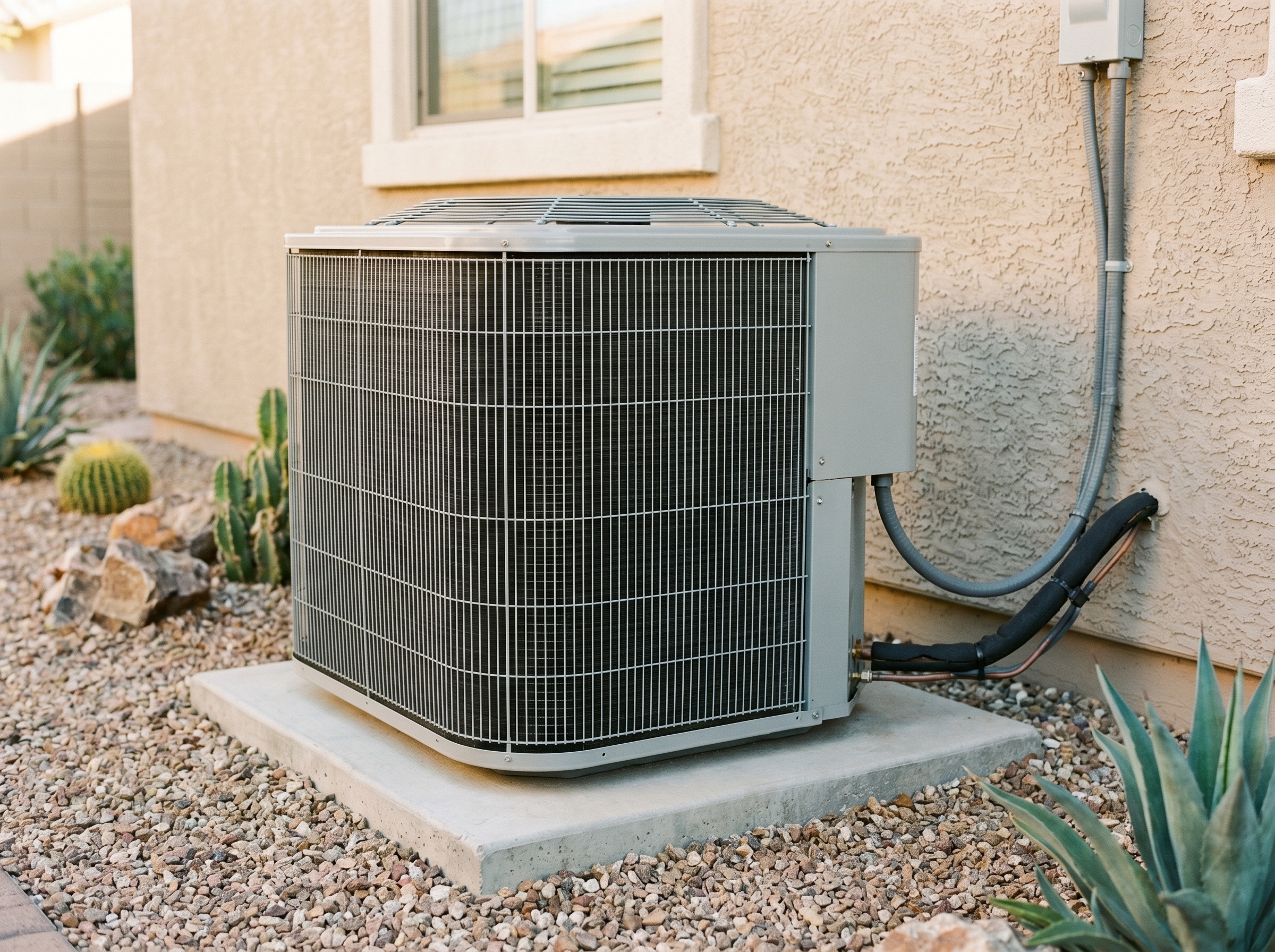
A heat pump is an all-electric HVAC system with dual functionality. Instead of burning fuel or running resistance coils, it uses refrigerant to transfer heat from one place to another, so a single system provides both heating and cooling.
- Cooling mode: the heat pump works like any central air conditioner, pulling heat out of your indoor air and releasing it outside to provide reliable cooling at your desired temperature.
- Heating mode: a reversing valve flips the refrigerant flow. The system pulls heat from the outdoor air, even cool air, and moves it inside.
Electric resistance heat, such as an electric furnace or the backup heat strips in an air handler, turns one unit of electricity into one unit of heat. A heat pump moves more heat energy than the electricity it uses, which is why the U.S. Department of Energy calls heat pumps an energy-efficient alternative to furnaces and air conditioners in climates with moderate heating and cooling needs. Standard air source heat pumps are built to heat in conditions much colder than Phoenix-area winters, which makes our winter nights easy work compared with colder regions.
Heat Pump vs. Traditional HVAC: AC and Furnace
Many Arizona homes have a traditional HVAC setup: a central air conditioner paired with a gas furnace or electric heat strips. These traditional systems use separate systems for heating and cooling. A heat pump system replaces both jobs with one outdoor unit and one indoor air handler that distribute conditioned air through the same ducts.
| Heat pump | AC + gas furnace | AC + electric heat strips | |
|---|---|---|---|
| Cooling | Same as a central AC | Central AC | Central AC |
| Heating | Moves heat from outdoor air | Burns natural gas | Resistance heat, 1:1 |
| Fuel | Electricity only | Electricity + gas | Electricity only |
| Supply air in heating | Warm, steady | Hottest | Hot, but costly to run |
| Equipment to maintain | One system | Two systems | One system + strips |
A traditional AC and existing gas furnace can still make sense. If your furnace is newer and working well, replacing only the AC side may be the most cost effective choice, and some homeowners simply prefer the hotter air a gas furnace delivers on a cold morning. Outside those cases, replacing an aging AC with a heat pump lets one installation cover both seasons. In heating mode, a heat pump delivers air that feels slightly cooler from the registers than a furnace, but it runs longer, steadier cycles that deliver more consistent temperatures.
If you’re replacing a straight air conditioner, see our AC installation and replacement options too, so you can compare both paths in one estimate.
Are Heat Pumps a Good Fit for Arizona Homeowners?
For most homes in the West Valley, yes. Our scorching summers and mild winters play to a heat pump’s strengths. The long cooling season means the system spends most of its life doing what any good air conditioner does, and the short heating season is easy work for a heat pump compared with colder regions.
Running on electricity alone also means no combustion equipment in the house for heating. There’s no gas line or flue to maintain for the heat pump itself, and no carbon monoxide produced by the heating system, which some homeowners see as a safety advantage over a gas furnace.
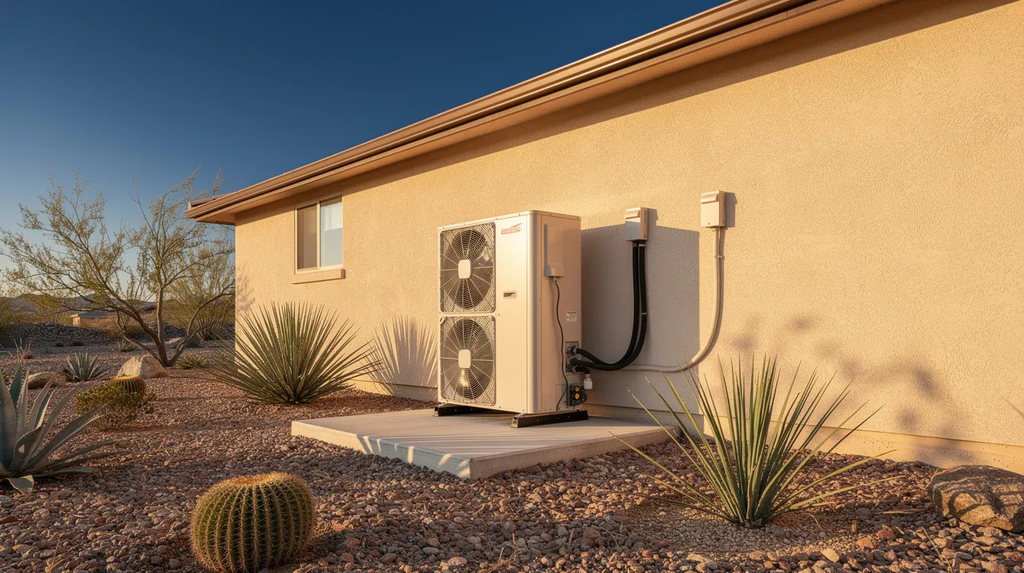
There are edge cases. Larger homes with poor insulation, high ceilings or undersized ducts may need duct upgrades to get the most from a heat pump. Homes at higher elevation in northern Arizona see much colder winters, where heat pumps lean more on backup heat. But for a typical single-story or two-story home in Peoria, Surprise or Sun City, a new heat pump is worth serious consideration.
Pros and Cons of Heat Pumps in Arizona
Advantages
- One system for both heating and cooling, with less equipment to maintain than separate systems
- Energy efficient heating compared with electric furnaces and heat strips
- No combustion and no carbon monoxide from the heating system
- Same cooling performance as a central air conditioner of the same capacity and efficiency
Downsides
- Higher upfront cost than replacing only the AC when a working gas furnace stays in place
- Supply air in heating mode feels cooler than a gas furnace’s
- Runs entirely on electricity, so savings versus gas depend on your utility rates
- Needs regular maintenance, because it works in both seasons instead of resting all winter
For most West Valley homeowners, the advantages outweigh the downsides, but a quick look at your home, ducts and current system will tell you which side your situation falls on
Types of Heat Pumps for Arizona Homes
Ducted Heat Pump
A ducted heat pump connects an outdoor unit to an indoor air handler and uses your existing ductwork to distribute conditioned air to every room. This is the most common setup in West Valley homes that already have central air, and usually the simplest swap when an old AC fails.
Package Heat Pump
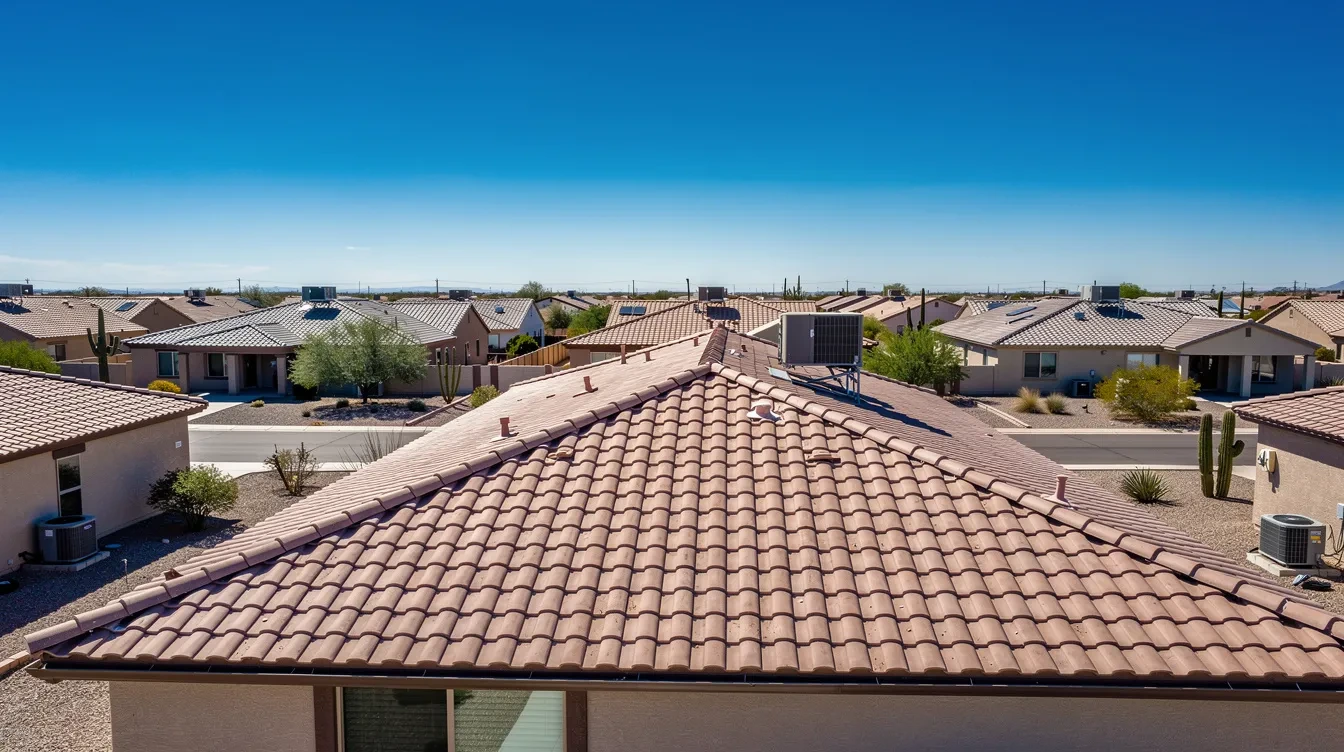
The compressor and air handler share one cabinet, usually on the roof or a ground pad. Package units suit homes built for them but can be harder to service when they sit on a roof.
Ductless Heat Pump
A ductless heat pump, or mini-split, uses wall- or ceiling-mounted indoor units to heat and cool individual rooms without ducts, which can suit room additions or garages.
What Is the Best Heat Pump for Arizona?
The best heat pump for Arizona isn’t a single brand. It’s the right heat pump for your home, sized correctly and installed well. Look for:
- Correct sizing. A Manual J load calculation, based on square footage, insulation, windows and sun exposure, determines the right capacity. An undersized unit runs nonstop in July; an oversized one short-cycles, wastes energy and wears out sooner.
- Strong cooling efficiency. Cooling is most of the work here, so the SEER2 rating matters more than in colder states. Since January 1, 2023, new split heat pumps must meet at least 14.3 SEER2 and 7.5 HSPF2 under federal DOE efficiency standards. Higher ratings use less electricity.
- Variable-speed or two-stage compressors. They adjust output to the load, run longer and quieter, and handle long stretches of extreme heat more smoothly than single-stage units.
- Proper installation. Correct refrigerant charge, airflow and duct sealing affect performance as much as the equipment. ENERGY STAR estimates that about 20 to 30 percent of the air moving through a typical duct system is lost to leaks, holes and poorly connected ducts, so air leaks are worth fixing during any replacement.
We repair all major heat pump brands, and every installation starts with an evaluation of your home and an upfront estimate.
Energy Savings and Efficiency
Heat pumps deliver energy efficient heating, and they save the most compared with electric resistance heat. If your home currently heats with an electric furnace or heat strips, switching to an efficient heat pump means reduced energy consumption and lower utility bills in winter. Compared with a gas furnace, the savings depend on your gas and electric rates, so ask for both options to be priced.
Two ratings tell you how efficient a system is:
- SEER2 (Seasonal Energy Efficiency Ratio 2) measures cooling efficiency.
- HSPF2 (Heating Seasonal Performance Factor 2) measures heating efficiency.
A higher efficiency rating in either means less electricity for the same comfort. Modern heat pumps rated well above the federal minimum can noticeably cut cooling costs compared with older equipment, especially when ducts are sealed and insulated. Over a system’s life, those cost savings help offset the higher upfront cost of a high-efficiency model. Routine maintenance through our residential service agreement keeps a new system running at its rated efficiency
Heat Pump Performance in Extreme Arizona Heat
Intense summer heat is the real test of any HVAC system here. Afternoon temperatures in the West Valley regularly pass 110°F, and heat waves can push past 115°F.
Residential heat pumps and air conditioners are built to keep running in that heat, but capacity and efficiency drop as outdoor temperatures climb. That’s normal, and it’s why correct sizing and clean coils matter so much for efficient cooling here. Long run times on the hottest afternoons are expected; constant short cycling is not.
West Valley equipment also faces challenges most of the country doesn’t: rooftop units sit in direct sun, fine desert dust coats outdoor coils, and strong UV wears down components. A system that struggles every summer may need a repair, a coil cleaning or, if it’s near the end of its life, a heat pump replacement.
Common Heat Pump Problems in Arizona
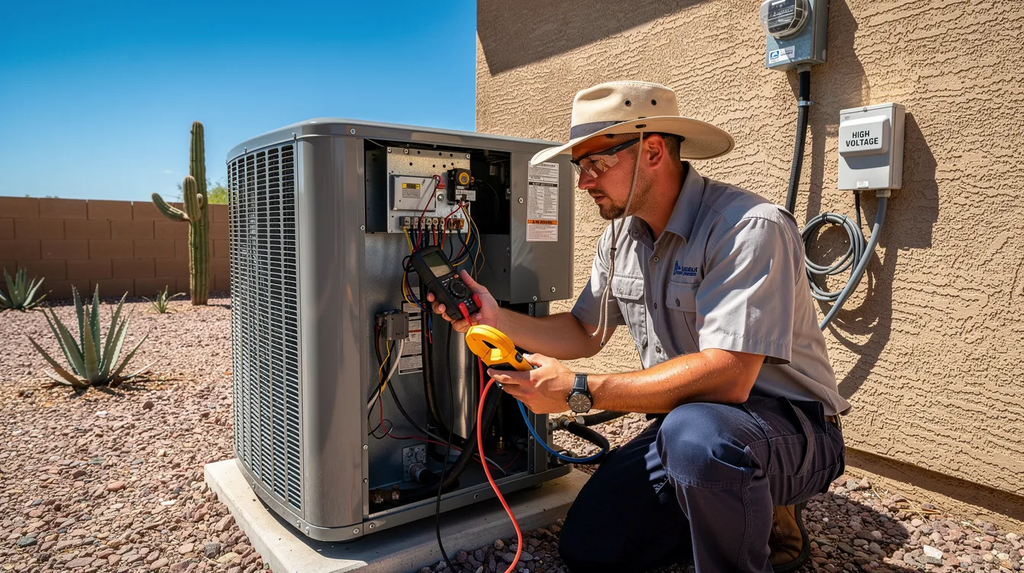
These are the issues behind most heat pump calls:
- Blowing cool air in heating mode. A few minutes of cool air during a defrost cycle is normal. Cool air that lasts longer usually points to a thermostat setting, a reversing valve, a defrost control or low refrigerant. See our heat pump repair service.
- Running constantly or short cycling. Often caused by a dirty filter, a dirty coil, low refrigerant or a system that was sized wrong.
- Ice that won’t clear. Light frost on the outdoor unit on a cold morning is normal and the defrost cycle melts it. Ice that stays, or ice on the refrigerant lines in summer, needs a technician.
- High winter electric bills. Backup heat strips (auxiliary or emergency heat) running more than they should can drive up costs. If your thermostat shows “AUX” or “EM HEAT” often, have the system checked.
- No heat at all. Check the thermostat is set to HEAT and the breaker hasn’t tripped. If that doesn’t fix it, our heating repair team repairs heat pumps, electric furnaces, heat strips and gas furnaces.
Leave anything involving refrigerant, electrical panels or opening equipment to a licensed HVAC technician. If any heating equipment in your home uses gas and you smell gas, leave the house and call your gas utility or 911.
Heat Pump Installation: Process and Cost Factors
Wahl Air Conditioning provides heat pump installation with free estimates. The installation process starts with an evaluation of your home and your existing system, then a written estimate. The price of having a heat pump installed depends on your home, not a flat rate. The main cost factors are:
- Home size, layout and the capacity the load calculation calls for
- Condition and sizing of your existing ductwork
- Electrical panel capacity and whether an upgrade is needed
- Indoor and outdoor unit placement, including rooftop installs
- Efficiency level and compressor type (single-stage, two-stage or variable-speed)
A straightforward like-for-like replacement is typically completed in about a day; retrofits that need duct repairs, electrical work or new refrigerant lines take longer. An in-home evaluation is the only way to get an accurate installation cost, and choosing an experienced heat pump installer matters as much as choosing the equipment. For larger projects, ask about financing through GreenSky for qualified customers, and note that SRP’s Cool Cash rebate covers qualifying heat pumps for SRP customers.
Heat Pump Maintenance in Arizona’s Dusty Desert
Dust, long run times and rooftop equipment make proper maintenance essential in the West Valley. A heat pump here works for most of the year, and skipping service shortens system life and raises energy bills.
Professional heat pump maintenance typically includes checking refrigerant charge, inspecting electrical connections, testing airflow and thermostat controls, verifying the reversing valve and defrost operation, and clearing drain lines. Coil cleaning matters especially here, because outdoor coils can collect a layer of fine grit in a single cooling season.
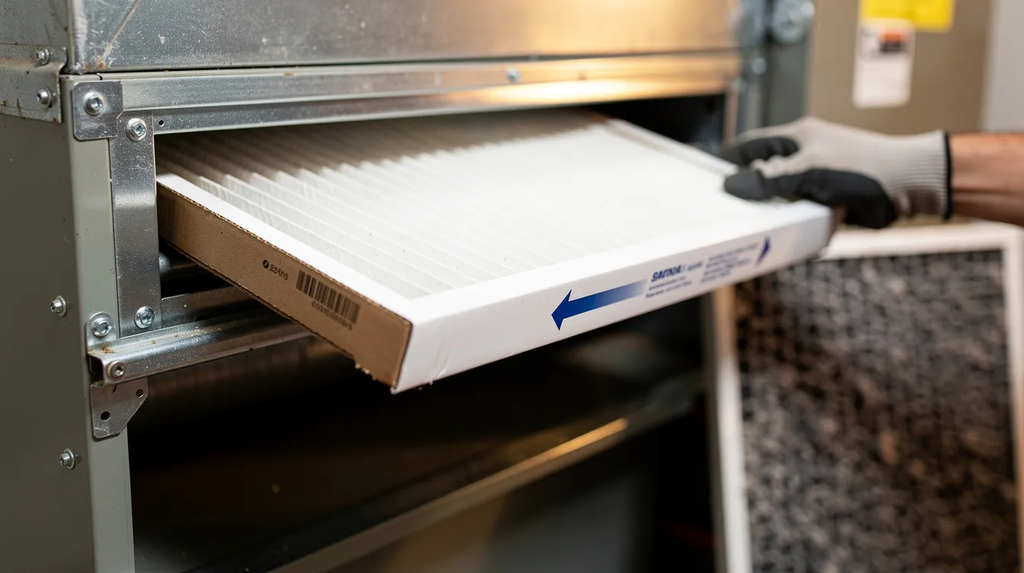
Like any central system, a heat pump moves your indoor air through its filter every time the blower runs, so a clean filter also helps with dust and indoor air quality. Between visits, change or clean your filter regularly during the cooling season and keep the area around the outdoor unit clear of debris, plants and patio furniture. For how often to schedule service, see our guide on how often to service your AC in Phoenix; the same schedule applies to a heat pump, since it also does your cooling.
Repair or Replace Your Heat Pump?
Age and repair frequency usually decide it. A heat pump that’s well past ten years old, needs frequent repairs, or is losing comfort every summer is often a candidate for heat pump replacement, while a newer system with a single failed part is usually worth repairing. We’ll lay out both options honestly, and replacement is never our default recommendation.
For sudden breakdowns, Wahl Air offers 24/7 emergency service, so you’re not left without air conditioning in July or without heat on a cold night.
Heat Pumps Arizona Homeowners Ask About: FAQs
Do heat pumps work in Arizona?
Yes. Arizona’s long, hot summers and mild winters suit heat pumps well. They cool like a central air conditioner and handle the short heating season efficiently.
Do heat pumps cool as well as a traditional air conditioner?
Yes. In cooling mode a heat pump works the same way as a central air conditioner, and a heat pump and an AC of the same capacity and efficiency deliver the same cooling.
Will a heat pump keep my home warm in winter?
Yes, for typical Phoenix-area winters. Heat pumps are built to heat in far colder climates than ours, and backup heat strips cover the rare very cold night.
What is the best heat pump for Arizona?
A correctly sized system with a strong SEER2 rating, ideally with a two-stage or variable-speed compressor, installed with sealed ducts and the right refrigerant charge. Installation quality matters as much as the brand.
What is the downside of a heat pump?
The main downsides are a higher upfront cost than replacing only an AC, cooler supply air in heating mode than a gas furnace, and a full reliance on electricity. In Arizona’s mild winters, those downsides matter less than in colder regions.
How much does it cost to install a heat pump in a 2,000 square foot house?
It depends on the capacity your home needs, the condition of your ducts, electrical work and the efficiency level you choose. We provide free estimates after evaluating your home, so you get a real number instead of a guess.
How long does a heat pump last in Arizona?
Roughly 10 to 15 years, depending on maintenance, sun exposure and dust. Regular service helps a system reach the upper end of that range
Can I switch from a gas furnace to a heat pump?
Yes. The project replaces your AC and furnace with a heat pump system and may require electrical upgrades. Compare costs with keeping the furnace, since savings depend on your gas and electric rates.
Are there rebates or tax credits for heat pumps in Arizona?
SRP offers per-ton rebates on qualifying heat pumps; check srpnet.com for current amounts and deadlines. APS ended its residential AC equipment rebates on January 1, 2026, and the federal 25C tax credit does not apply to systems installed after December 31, 2025. Programs change, so confirm before you buy.
Heat Pump Service From Wahl Air Conditioning
Wahl Air Conditioning is a family-owned HVAC company based in Peoria, serving Phoenix and the West Valley since 1957. We install, repair, replace and maintain heat pumps for homes across Peoria, Glendale, Surprise, Sun City and nearby communities, with 24/7 emergency service.
- Licensed and insured Arizona contractor: ROC# R39R-055930 and C39-075896
- NATE-certified HVAC technicians
- BBB A+ accredited, rated 4.9 stars from 200+ Google reviews
- Upfront, written estimates before any work begins
- Residential service agreements from $154 a year, with 15% off labor and materials and priority scheduling
Ready to talk about a heat pump for your home? Call (602) 242-2353 or request an estimate online. We’ll evaluate your existing system, explain your options and give you a straight answer about what makes sense.